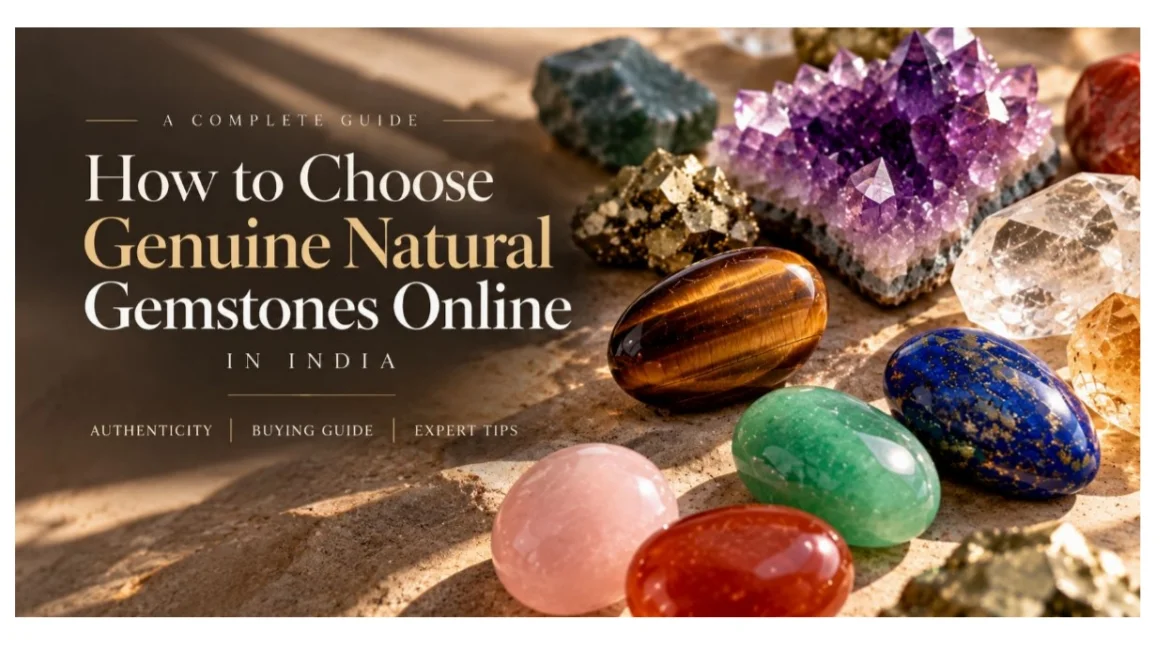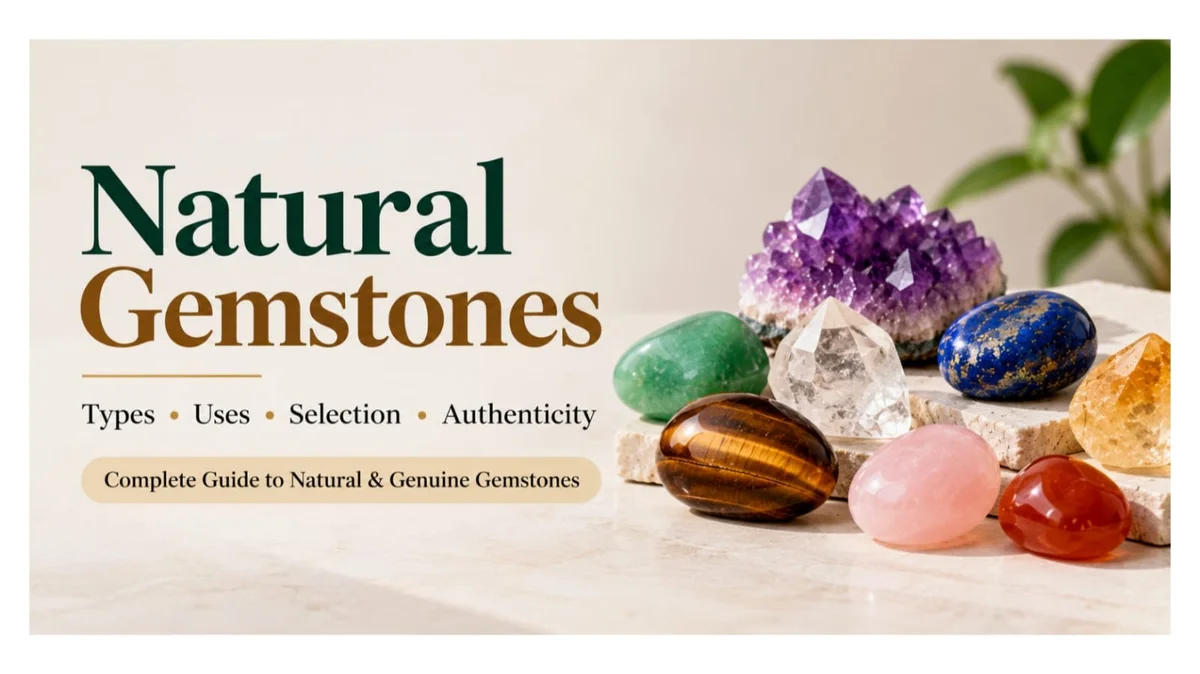
Natural Gemstones: Complete Guide to Types, Uses, Selection & Authenticity
Natural gemstones have been valued for centuries for their beauty, unique colours, rarity and traditional significance. Today, people buy gemstones for jewellery, spiritual practices, personal collections, gifting and traditional astrological purposes.
With so many products available online, it can sometimes be difficult to understand the difference between natural gemstones, genuine gemstones, treated stones, synthetic stones and imitation stones.
This complete guide will help you understand the basics of natural gemstones, popular gemstone types, their traditional uses, how to choose a gemstone and what to check before buying gemstones online in India.
What Are Natural Gemstones?
A natural gemstone is a mineral or organic material that has formed naturally through geological or natural processes rather than being manufactured entirely in a laboratory.
Natural gemstones can vary in:
- Colour
- Clarity
- Shape
- Pattern
- Size
- Texture
- Inclusions
These natural variations are normal and can be one of the characteristics that make each stone unique.
Some gemstones are commonly cut and polished for jewellery, while others are used in their natural or semi-polished form for spiritual and decorative purposes.
Natural Gemstone vs Genuine Gemstone
The terms natural and genuine are often used together, but they are not always exactly the same.
Natural Gemstone
A natural gemstone generally refers to a stone that originated naturally rather than being completely laboratory-created.
Genuine Gemstone
“Genuine” is commonly used to describe a product that is represented as the gemstone it is claimed to be.
However, the word itself is not a substitute for laboratory verification.
When purchasing an expensive gemstone, customers should look at the complete product information and, where appropriate, request suitable certification or independent testing.
What Are Synthetic Gemstones?
Synthetic gemstones are laboratory-created materials that can have the same or very similar chemical and physical characteristics as their natural counterparts.
They are different from simple imitation stones.
For example, a laboratory-created gemstone may resemble a natural gemstone closely in appearance and composition, while a glass imitation may only imitate its appearance.
This distinction is important when buying gemstones because natural, synthetic and imitation products can have very different values.
Popular Natural Gemstones
There are many varieties of natural gemstones available in the market.
Some popular examples include:
Amethyst
Amethyst is a purple variety of quartz and is popular for jewellery, decorative products and spiritual collections.
It is commonly available in shades ranging from light lavender to deeper purple.
Pyrite
Pyrite is known for its metallic golden appearance and is often used in decorative and spiritual products.
It is popularly associated with abundance and prosperity in crystal and spiritual traditions.
Tiger Eye
Tiger Eye is recognised for its characteristic golden-brown chatoyant appearance.
It is widely used for bracelets, pendants, beads and decorative pieces.
Green Aventurine
Green Aventurine is commonly recognised by its green colour and subtle sparkling appearance.
It is popular in gemstone bracelets, decorative products and spiritual collections.
Lapis Lazuli
Lapis Lazuli is known for its deep blue colour and may contain natural golden or white mineral inclusions.
It has been valued historically for decorative and ornamental purposes.
Cat's Eye
Cat's Eye gemstones are known for their distinctive band of light, known as chatoyancy.
The term “Cat's Eye” can refer to different materials, so buyers should check exactly which gemstone or variety is being offered.
Citrine
Citrine is a yellow to golden variety of quartz and is popular in jewellery and gemstone collections.
Other Natural Gemstones
Other commonly encountered gemstones include:
- Rose Quartz
- Clear Quartz
- Carnelian
- Moonstone
- Garnet
- Agate
- Fluorite
- Jade
- Onyx
- Tourmaline
Each gemstone has its own physical characteristics, colour range, availability and market value.
Why Do Natural Gemstones Have Different Colours?
The colour of a gemstone can be influenced by its chemical composition, trace elements, crystal structure and geological formation.
For this reason, two stones of the same gemstone variety may not look exactly identical.
For example, natural gemstones may show differences in:
- Colour intensity
- Transparency
- Patterns
- Inclusions
- Surface texture
These differences do not automatically indicate that a gemstone is fake.
In fact, natural inclusions and variations can be part of the natural character of a gemstone.
What Are Gemstone Inclusions?
Inclusions are internal features that occur within a gemstone.
They may include:
- Tiny mineral crystals
- Natural fractures
- Gas or liquid pockets
- Growth patterns
- Other geological features
The presence of inclusions can sometimes provide useful information when a gemstone is being examined by a trained gemologist.
However, not every inclusion proves that a gemstone is natural, and not every clear gemstone is synthetic.
Professional identification is more reliable than judging a stone only with the naked eye.
Traditional Uses of Gemstones
Gemstones are used for many different purposes.
Jewellery
Gemstones are commonly used in:
- Rings
- Bracelets
- Pendants
- Necklaces
- Earrings
- Mala
- Anklets
Spiritual Practices
Some gemstones are traditionally used for:
- Meditation
- Prayer
- Mantra practice
- Spiritual decoration
- Personal पूजा spaces
Decorative Products
Natural stones are also used in:
- Gemstone trees
- Crystal décor
- Sculptures
- Idols
- Towers
- Carvings
Traditional Astrology
Certain gemstones are associated with planets and zodiac traditions in Vedic astrology.
People interested in astrological gemstones should ideally consult a qualified practitioner before choosing a stone based solely on internet recommendations.
How to Choose the Right Gemstone?
Choosing a gemstone depends on why you want to purchase it.
For Jewellery
Consider:
- Colour
- Size
- Shape
- Durability
- Clarity
- Setting
- Comfort
For Spiritual Use
Consider:
- Your intended practice
- Traditional significance
- Size
- Form
- Ease of care
For Astrology
Do not choose an expensive gemstone solely because a website says it is suitable for your zodiac sign.
Traditional astrological recommendations can depend on factors such as birth chart, planetary positions and the particular astrological system being followed.
For Collection
Collectors may focus on:
- Rarity
- Origin
- Colour
- Natural characteristics
- Size
- Quality
- Documentation
What Should You Check Before Buying Natural Gemstones Online?
If you are searching for natural gemstones online in India, consider the following points before purchasing.
1. Product Name
Check whether the exact gemstone variety is clearly mentioned.
2. Weight and Size
The product should ideally have clear information about its size and/or weight.
3. Natural or Synthetic
Check whether the seller clearly states whether the gemstone is natural, synthetic or imitation.
4. Treatments
Some gemstones may undergo treatments to improve colour, clarity or appearance.
For higher-value purchases, ask whether any treatment has been performed.
5. Product Photographs
Photographs can help you understand the appearance, but screen settings and lighting can change how colours appear.
6. Certification
For valuable gemstones, consider whether an appropriate gemological certificate is available.
7. Seller Information
Look for transparent product descriptions, contact information, shipping details and return/refund policies.
Are Natural Gemstones Perfect?
No.
Natural gemstones are formed through natural processes and may contain variations.
A natural stone may have:
- Minor inclusions
- Small colour variations
- Natural patterns
- Uneven texture
- Slight shape variations
A completely flawless appearance should not automatically be considered proof of higher quality or authenticity.
How to Care for Natural Gemstones?
Different gemstones have different hardness and sensitivity.
A general care routine includes:
- Avoid dropping gemstones.
- Avoid unnecessary impact.
- Keep jewellery away from harsh chemicals.
- Store stones separately to reduce scratching.
- Avoid prolonged exposure to unsuitable heat or chemicals.
- Clean according to the specific gemstone's requirements.
Some softer or more sensitive gemstones require extra care.
Can Natural Gemstones Have Colour Variations?
Yes.
Natural gemstones can vary from one piece to another.
Two stones from the same type may have slightly different:
- Colour
- Pattern
- Transparency
- Inclusions
- Shape
This is especially important when buying natural gemstone bracelets, malas, trees and other products made from multiple stones.
Buying Natural Gemstones Online in India
Online shopping makes it easier to access a wide variety of gemstones, but customers should still make informed decisions.
Before placing an order, check:
- Exact gemstone name
- Natural/synthetic status
- Size
- Weight
- Quantity
- Product photographs
- Treatment information where relevant
- Return policy
- Shipping information
- Seller details
For high-value gemstones, independent gemological verification can provide additional confidence.
Final Thoughts
Natural gemstones are valued for their beauty, geological character, traditional significance and wide range of uses.
Whether you are buying a gemstone for jewellery, spiritual practice, collection or traditional astrology, understanding the difference between natural, genuine, synthetic and imitation gemstones can help you make a better decision.
Natural stones are not expected to look completely identical. Their colour, pattern, texture and inclusions can vary naturally.
If you are looking for natural gemstones online in India, choose products with clear descriptions and buy from a seller that provides transparent information about the gemstone and applicable policies.
Explore the natural gemstone collection at Rudramani Gems & Rudraksha to discover gemstone products for jewellery, spiritual use, gifting and personal collections.